

Every year, sometime in late November, tech CEOs and VPs of Product watch Spotify Wrapped go viral and send their product teams a request: “We should do this.”
You can see the appeal. In 2025, Spotify said 200 million users (+19% year-over-year) shared Wrapped over 500 million times (+41% year-over-year) within 24 hours1.
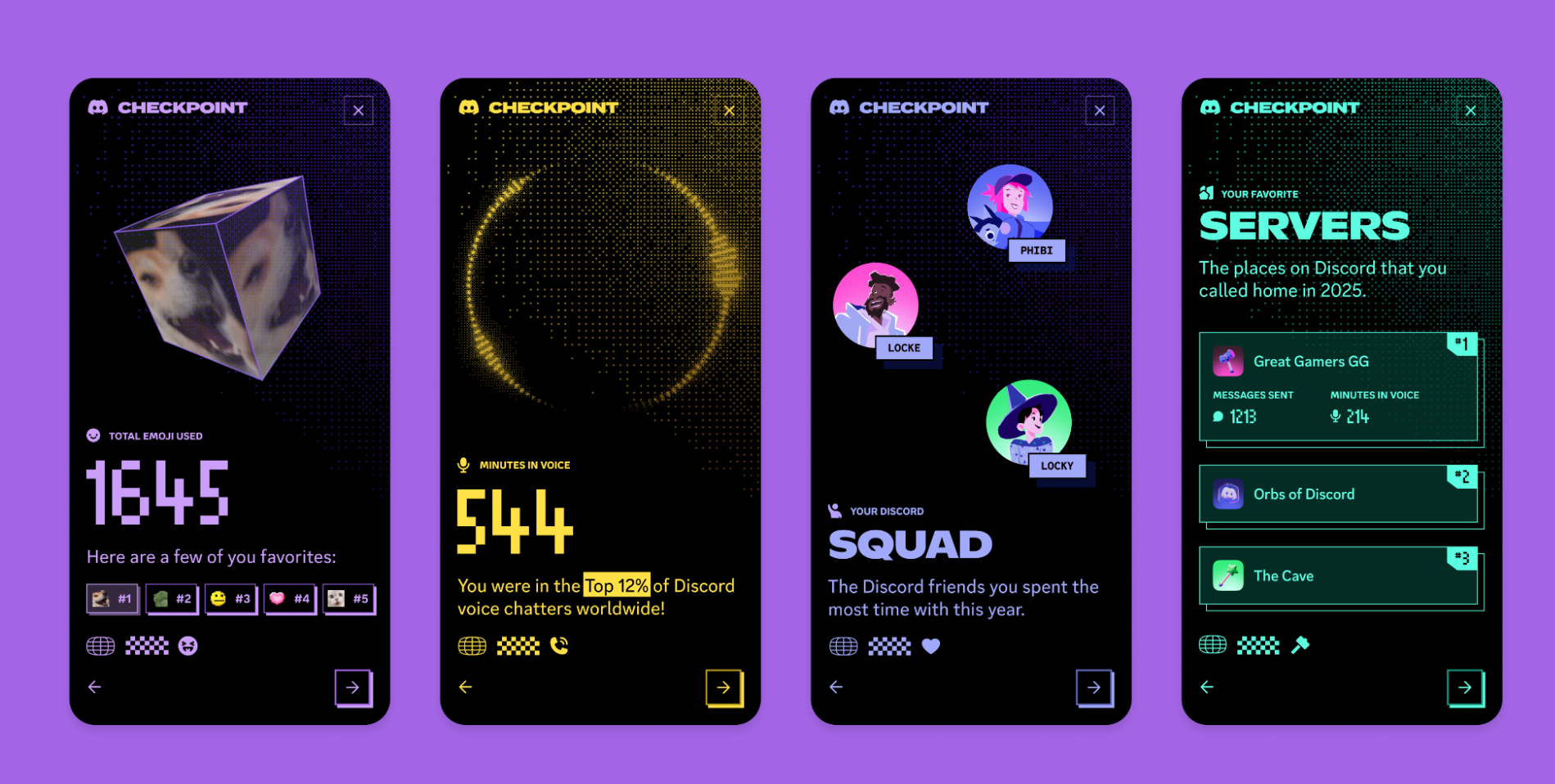
Naturally, the copycats follow. YouTube Recap, Strava Year in Sport, Duolingo Year in Review, Granola Crunched, Grammarly Writing Wrapped, Apple Music, Amazon Music, LinkedIn, Uber, Tiktok, Google Search, Twitch, Discord, Reddit, the list goes on.
But why does Spotify’s version generate significant anticipation and engagement, while the others struggle to gain traction? For comparison, YouTube has nearly 4x the number of users (YouTube 2.7B2, Spotify 700M3) yet Spotify Wrapped generated ~10x more interest.
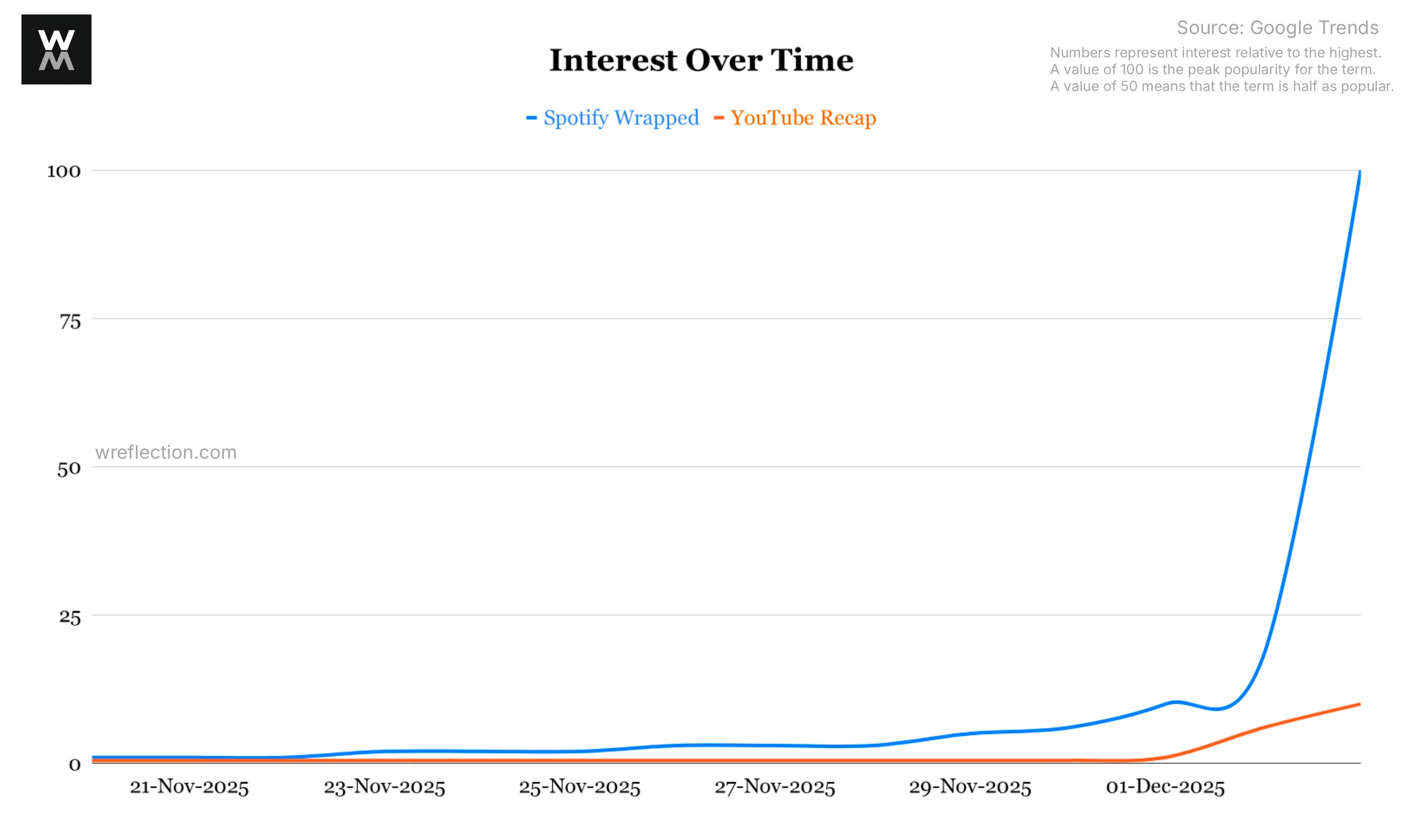
Product Or Campaign?
Adam Fishman, who writes the newsletter FishmanAF, spoke with former Spotify’s Head of Growth Marketing Patrick Moran about what separates Spotify from the rest4.
“To do well, this takes months to plan out because it is just as much work for product and engineering as it is for marketing.”
“In reality the Wrapped campaign is really seen as a “product” at Spotify and gets way more resources, support, budget, etc. than a one-off campaign would.”
If you want results like Spotify, you need to invest in it like Spotify does. Treating your year-end recap as a holiday marketing campaign will not produce the same outcome.
Before You Ship
Adam’s piece includes five questions product leaders and CEOs should evaluate before committing to a year-recap feature. Building on those, I recommend three overarching questions.
1. What is the Goal?
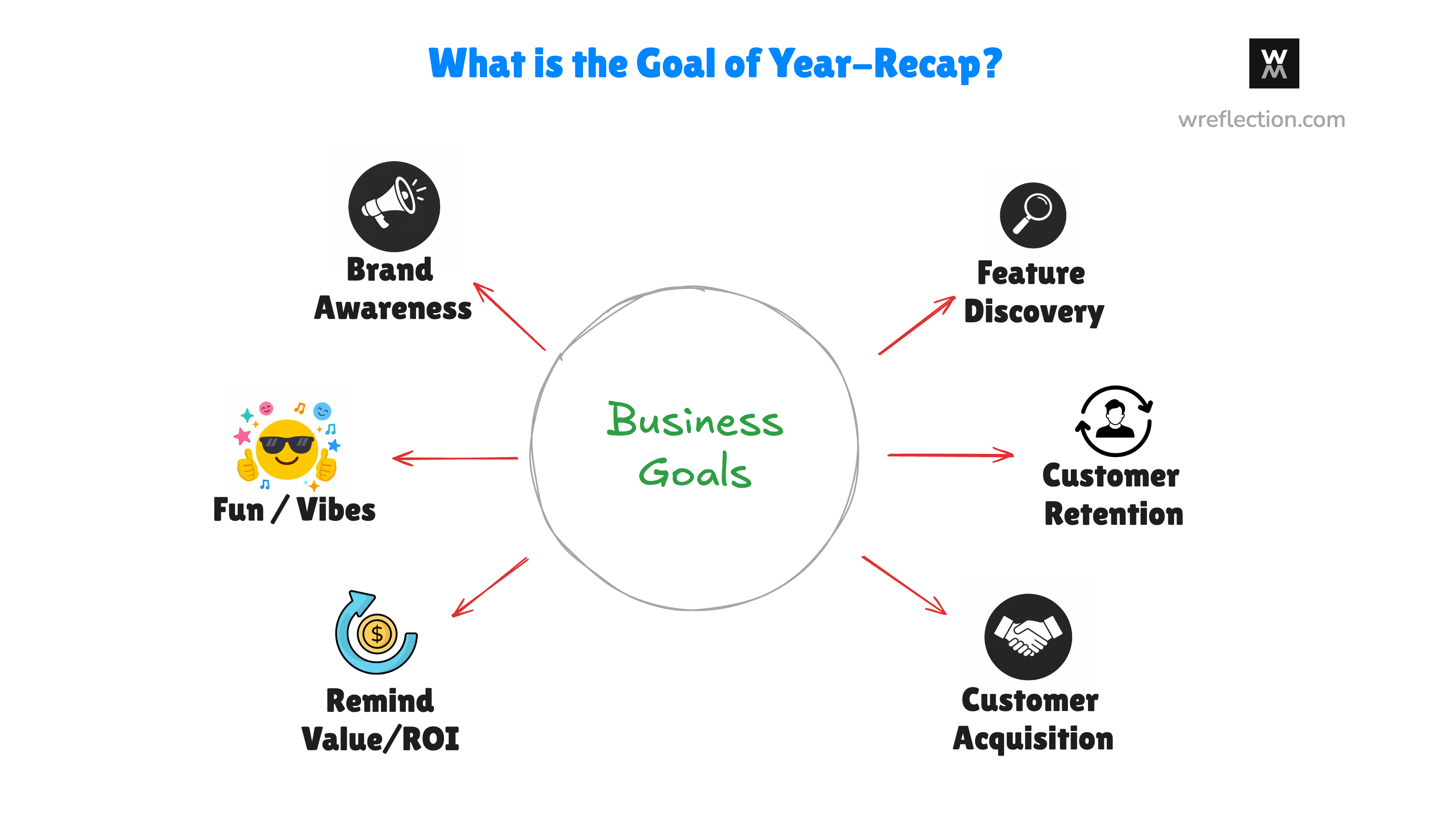
What do you hope to accomplish with this feature is probably the most important question.
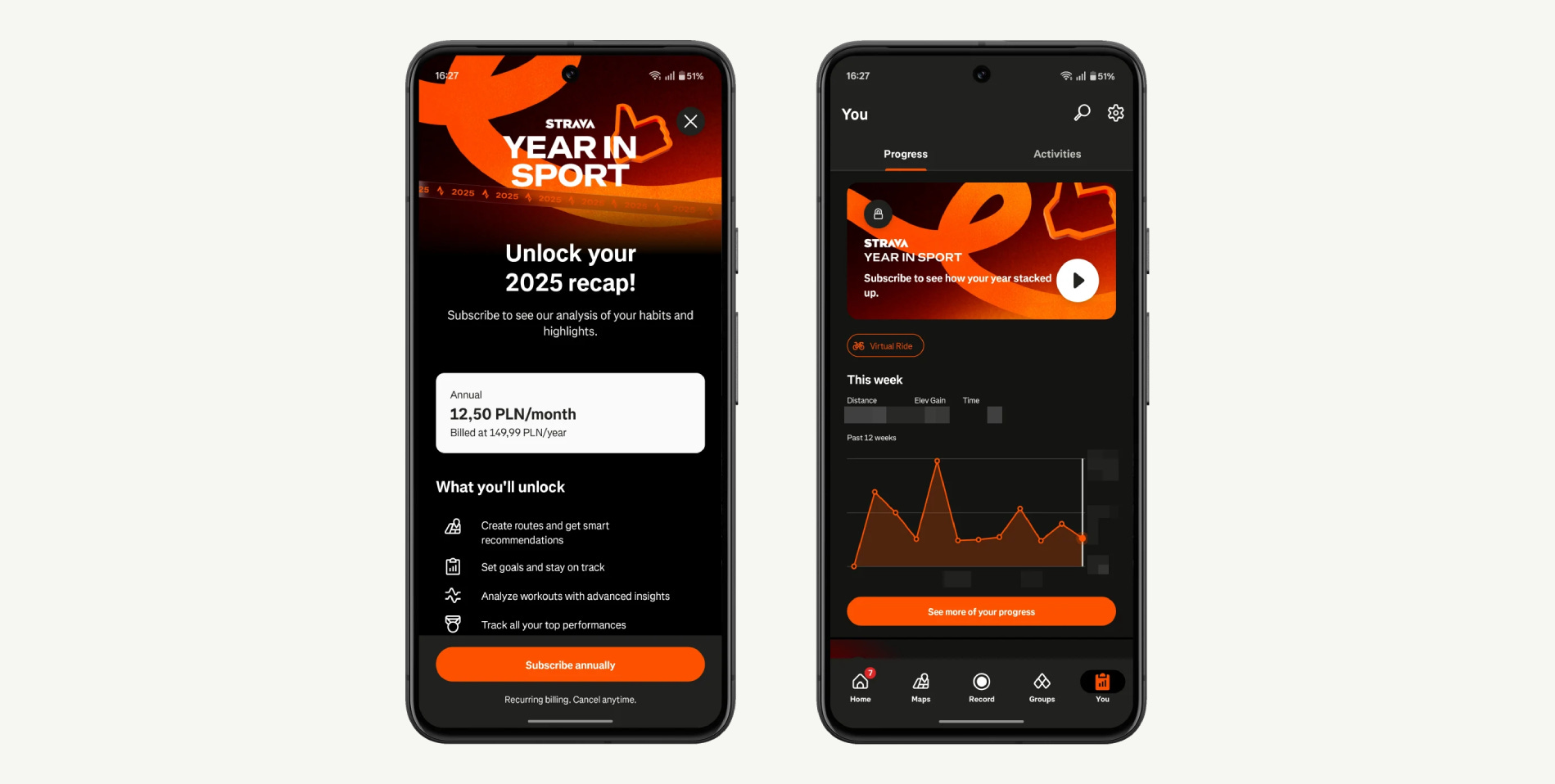
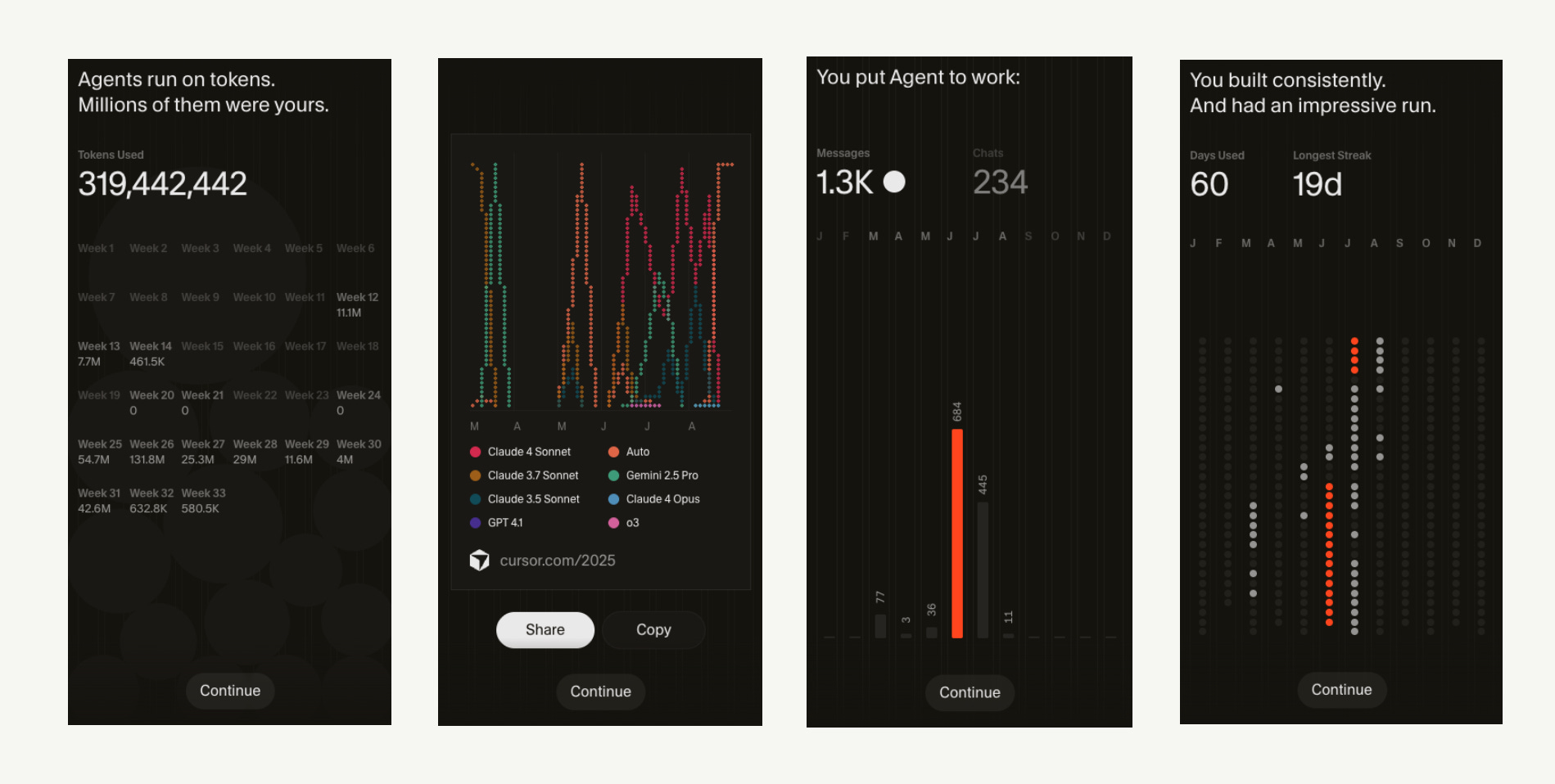
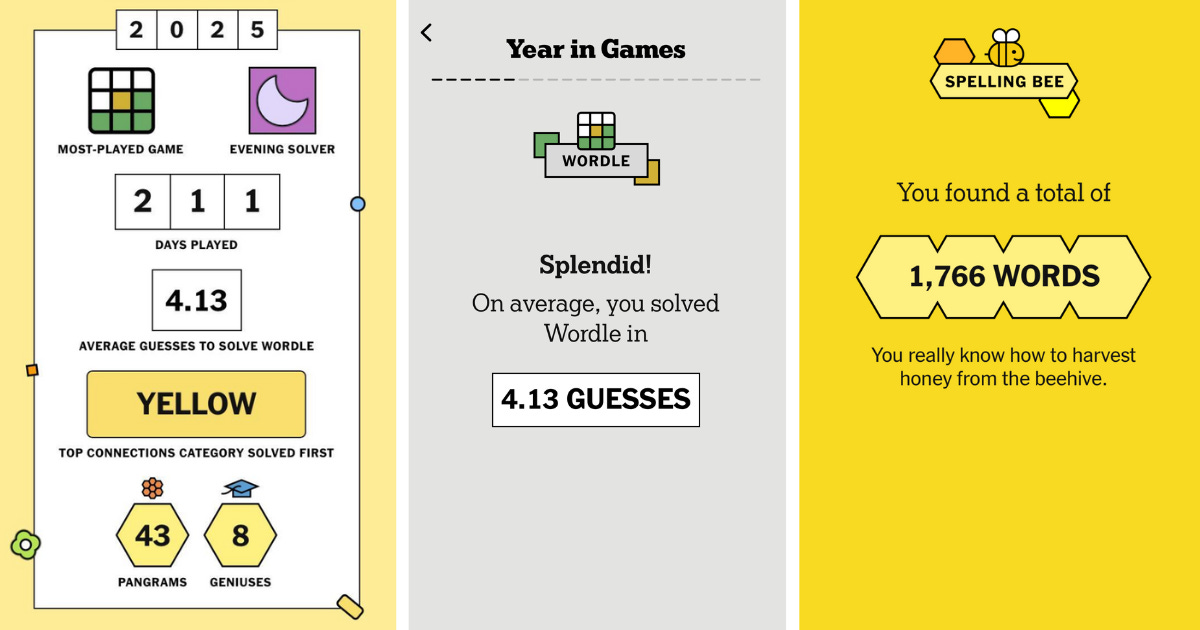
The goal could be brand awareness, or customer acquisition and retention. It could be feature discovery to remind users about underutilized capabilities like Spotify’s playlists or podcasts. Or you might want to reinforce the value or ROI your product generates, as Cursor does by showing users how many lines of code they generated. Sometimes, the goal could simply be fun and vibes, which creates goodwill in harder-to-measure ways. Each goal leads to different design choices and strategies. For example, NYT Games makes their year-end recap accessible to free users, but shows ads since the high engagement makes the impressions valuable. Others like Strava locks theirs behind the subscription paywall as a customer acquisition play.
2. Will users be happy to see such personalized usage data?
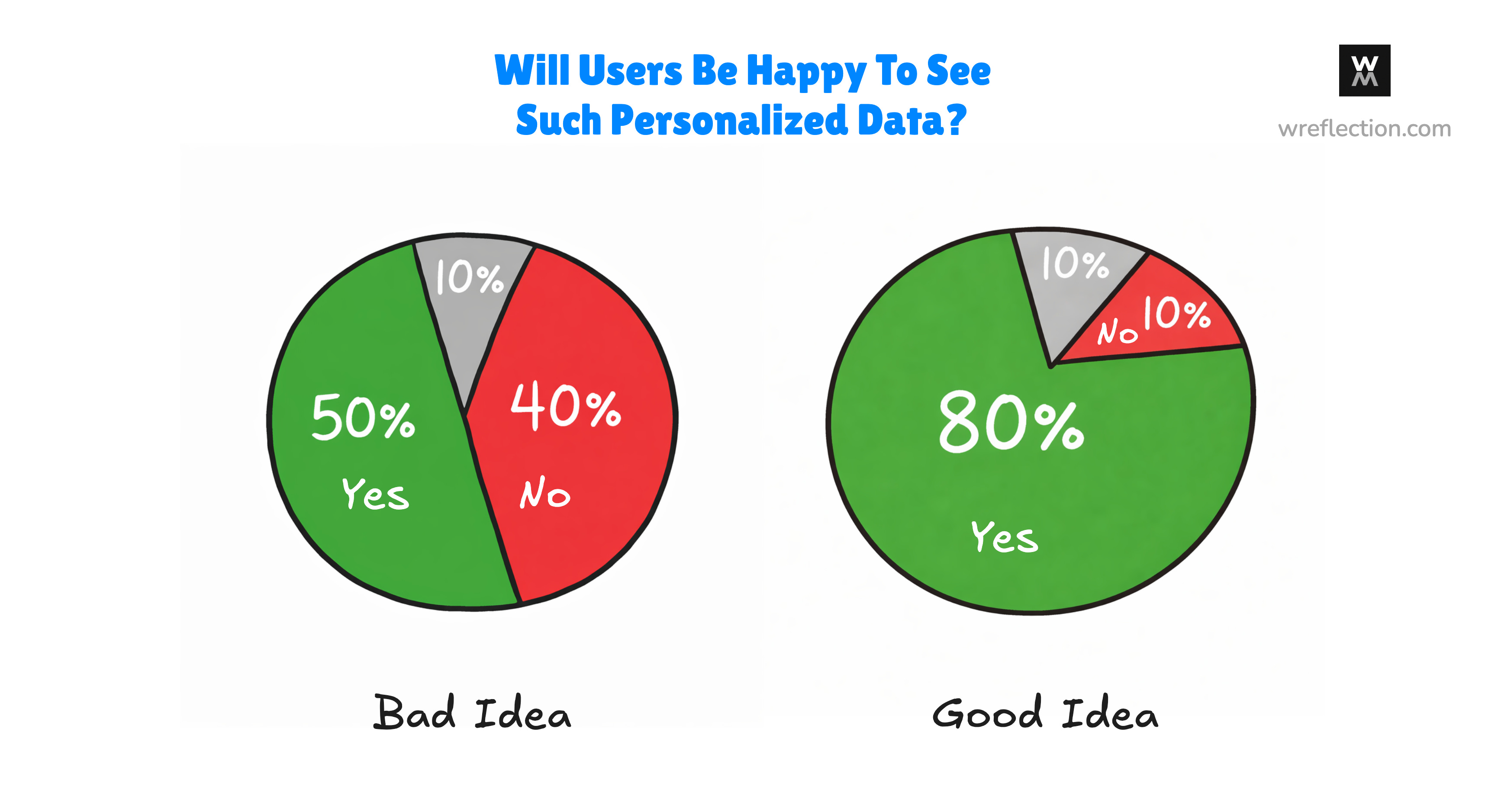
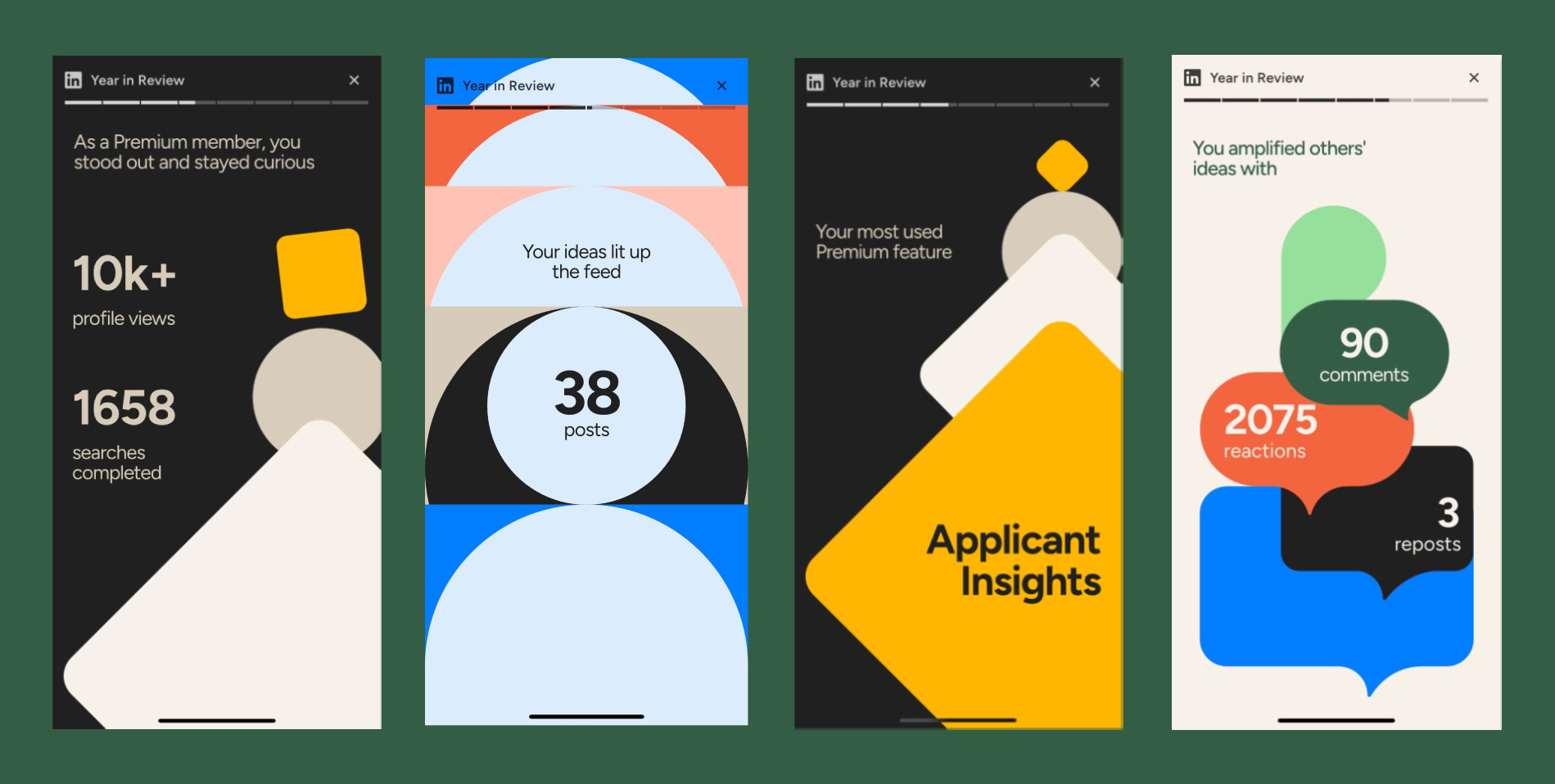
Some products generate data users genuinely want to reflect on. Good candidates include music listening, fitness achievements, learning streaks. These activities showcase effort, taste, and identity. Bad candidates include job applications submitted, fast food orders, or hours spent scrolling. These activities carry shame or anxiety. Dating apps would not want to remind users of how many failed matches they accumulated or food delivery apps would not want to remind users they ordered from McDonald’s 300 times last year. In fact, Saturday Night Live lampooned exactly this dynamic in a hilarious sketch. Products serving multiple user types must also segment their recaps. Spotify wisely gives artists different data than listeners while it seems like LinkedIn’s 2025 Year-In-Review did not differentiate between creators, recruiters, and regular users.
3. Will users get social validation from broadcasting this?

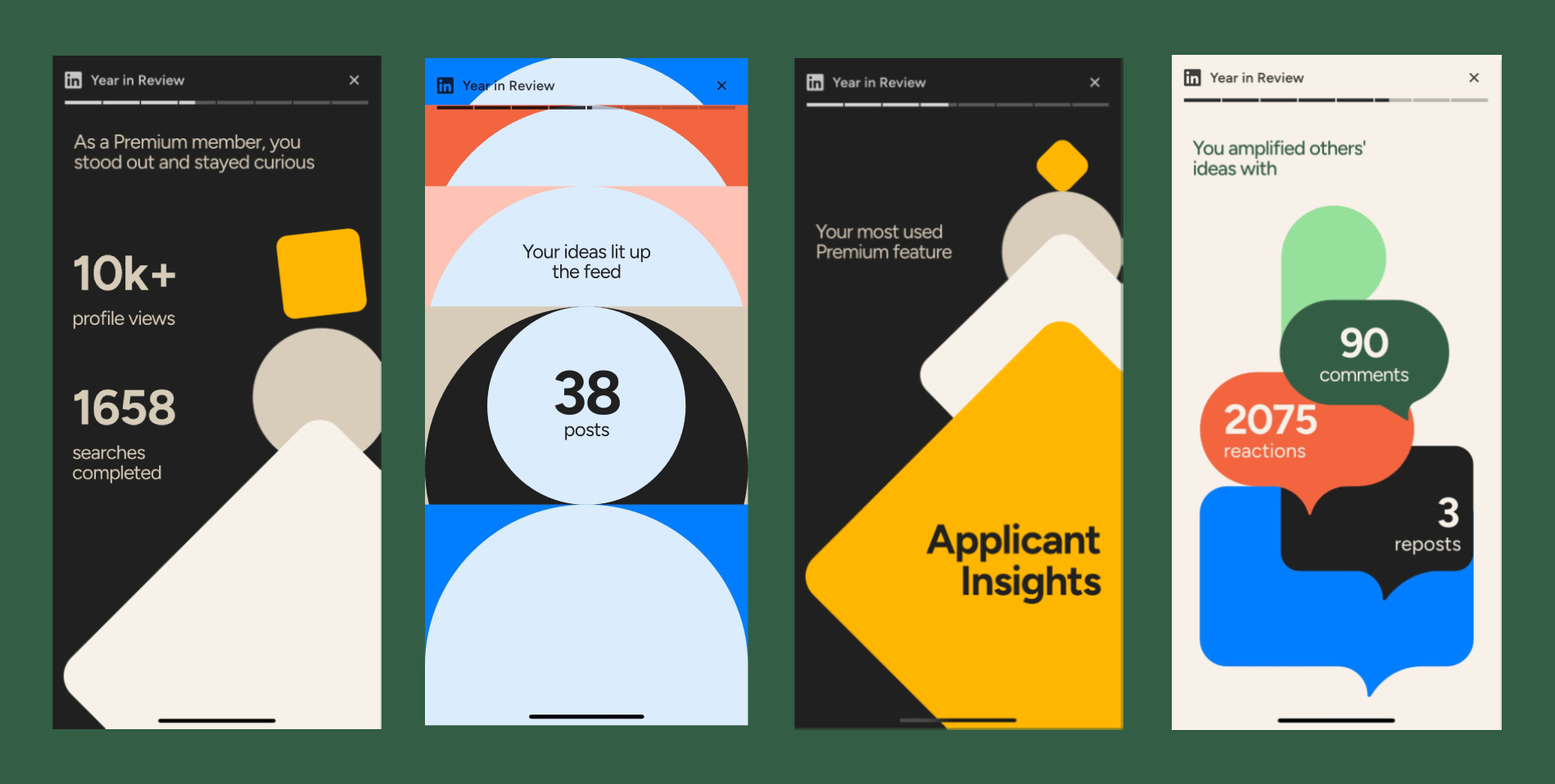
Spotify’s Wrapped succeeds in part because it creates social capital. Being in the “top 1% of Swifties” gives users something to brag about and bond over belonging to the tribe. Compare that to LinkedIn’s Year in Review, which tells you that you used “Applicant Insights” frequently. As one user in Lenny Rachitsky’s Slack community5 put it: “I actually have no idea what the applicant insights feature is that apparently I used or the connection between views and searches and premium.” Just because a feature name is well known inside your company does not mean it has similar recognition in customers’ minds. If users don’t even understand it, they won’t get any social validation from broadcasting it.
Unintended Consequences
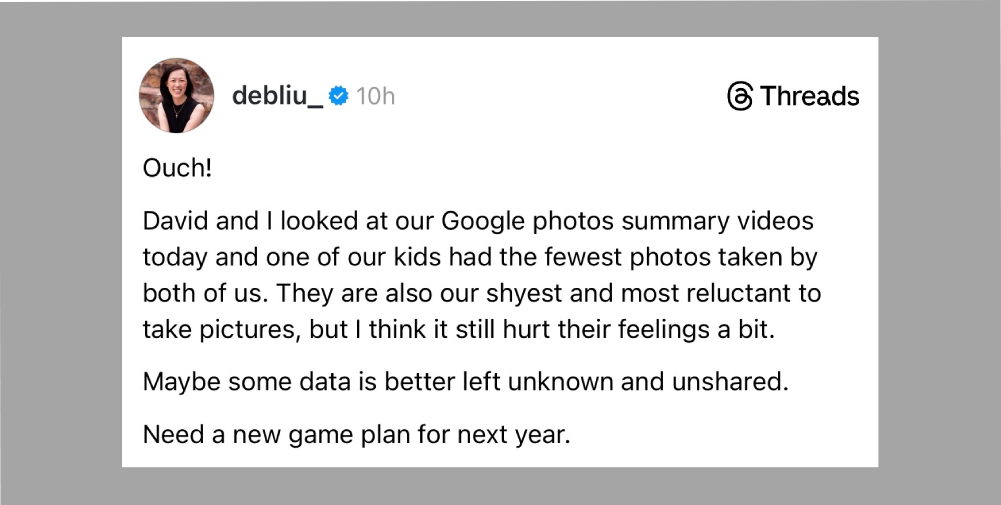
Some products have more surface area for pitfalls than others. Personalized data that works for some users can become problematic for others. For example, a fitness app highlighting workout streaks is fine up until someone goes through a difficult period (illness, depression, or major life changes) and the streak data reminds them of a decline they would rather forget. A year-end recap that highlights low usage creates the same problem, effectively calling out customers for not exercising enough. Some pitfalls cannot be predicted in advance. When they surface, teams need to monitor social channels and respond quickly. As Deb Liu, a former Facebook executive, noted6:
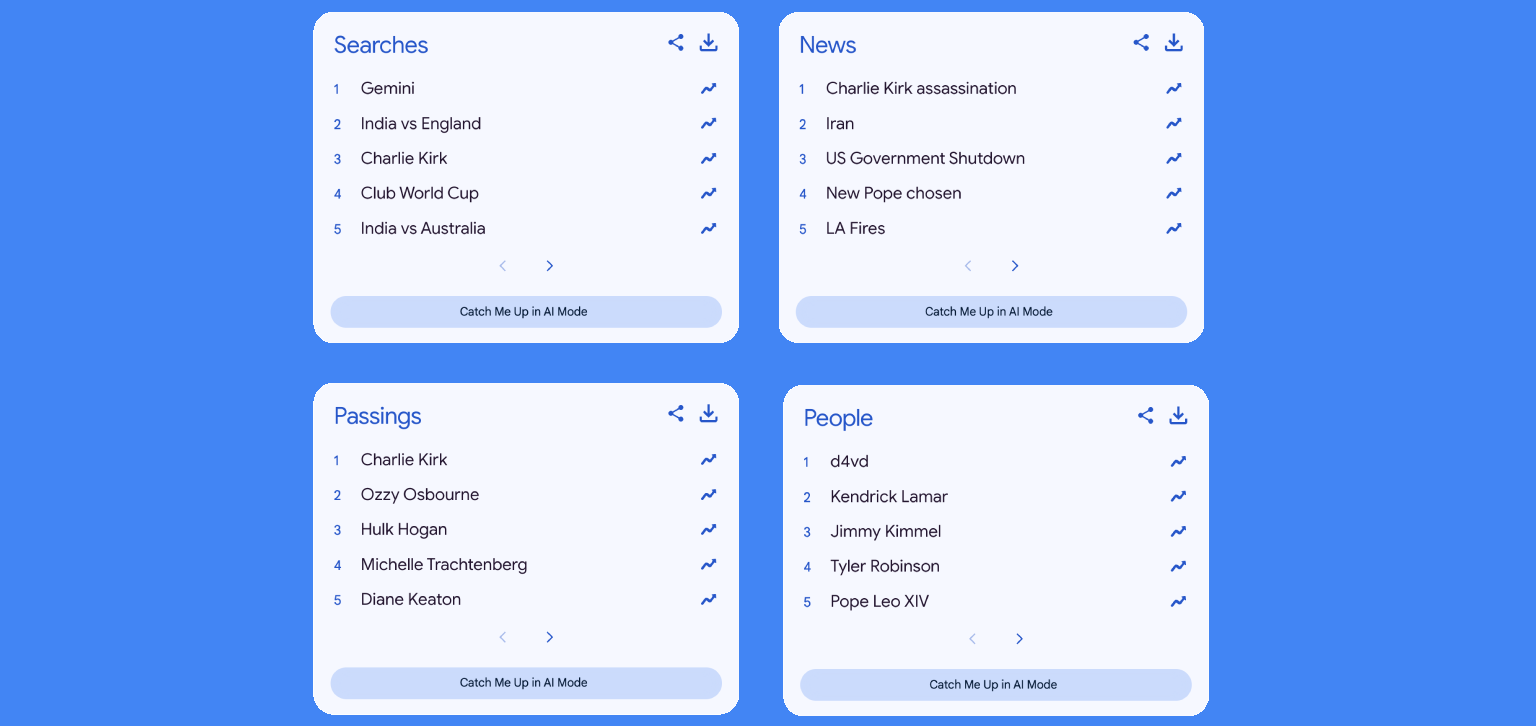
For products with high risk of surfacing unwelcome personal data, pivoting to aggregate information provides a safer alternative. Google, Netflix and TikTok year-end recaps lean toward showing users what was popular across the platform rather than potentially embarrassing personal statistics.
Does year-recap make sense for B2B or work-related products? Generally, no. Most people would not want to know they spent 4,000 hours in Jira, especially if it reminds them they did so because Jira’s errors forced endless troubleshooting. Yet Granola, an AI meetings tool, received notably positive reception for its “Crunched” year-end feature despite being work-related. In the same Lenny’s Slack community discussion from earlier, users reacted to Granola’s ‘Crunched’ feature positively, a stark contrast to their reaction to LinkedIn’s recap. “Just in the Lenny community we have so many people talking positively about Granola. In a crowded AI meetings tools market, that’s massive.” versus “The LinkedIn one was awful. Graphics were bad, wasn’t fun, wasn’t useful.” The difference may be that Granola focused on entertaining AI-generated summaries with simple/minimal raw statistics.
The Missed Opportunities
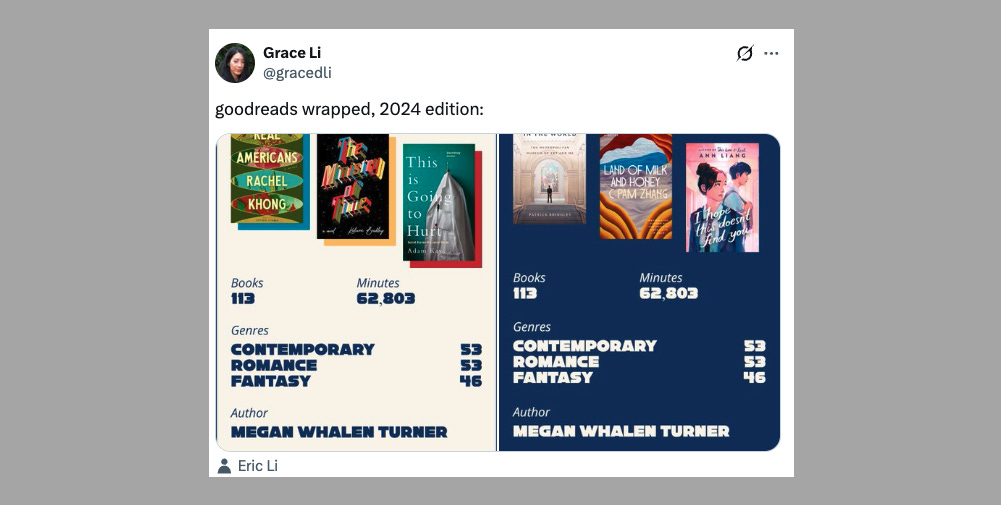
Some products that seem like natural fits for a year-end recap feature are yet to ship one. Kindle and Goodreads are the most obvious candidates to me. Amazon owns both properties and has rich data about reading habits. Yet users have had to resort to creating their own year-end Kindle and Goodreads recaps because the official product does not exist. This seems like a missed opportunity because reading, like music listening, reflects identity and taste.
LinkedIn’s daily games have built an engaged audience, but the 2025 LinkedIn Year-In-Review omitted gaming statistics entirely. For players, like me, who solve Queens and Tango daily, games data would have provided more shareable content because competitive streaks and leaderboards already drive engagement7.
The Copycat Tax
The year-in-review format has a long history. News Publications pioneered it with their annual “Year In Review” issues, recapping the stories and events that shaped the previous twelve months. In tech, it was actually Facebook, not Spotify, which launched the first personalized Year in Review in 2014. Spotify followed two years later. Facebook eventually killed its feature after bad press over traumatic memories8. Spotify, on the other hand, went from strength to strength. After moving from email recaps to in-app experiences and rebranding as Wrapped in 20199, the feature became a cultural phenomenon.
Spotify now owns the word “Wrapped” and sets the standard in the consumer mind. The association is so strong that users describe every recap as “Wrapped” regardless of which company ships it or what the company names their feature. Every competitor pays a copycat tax unless they do something genuinely different.
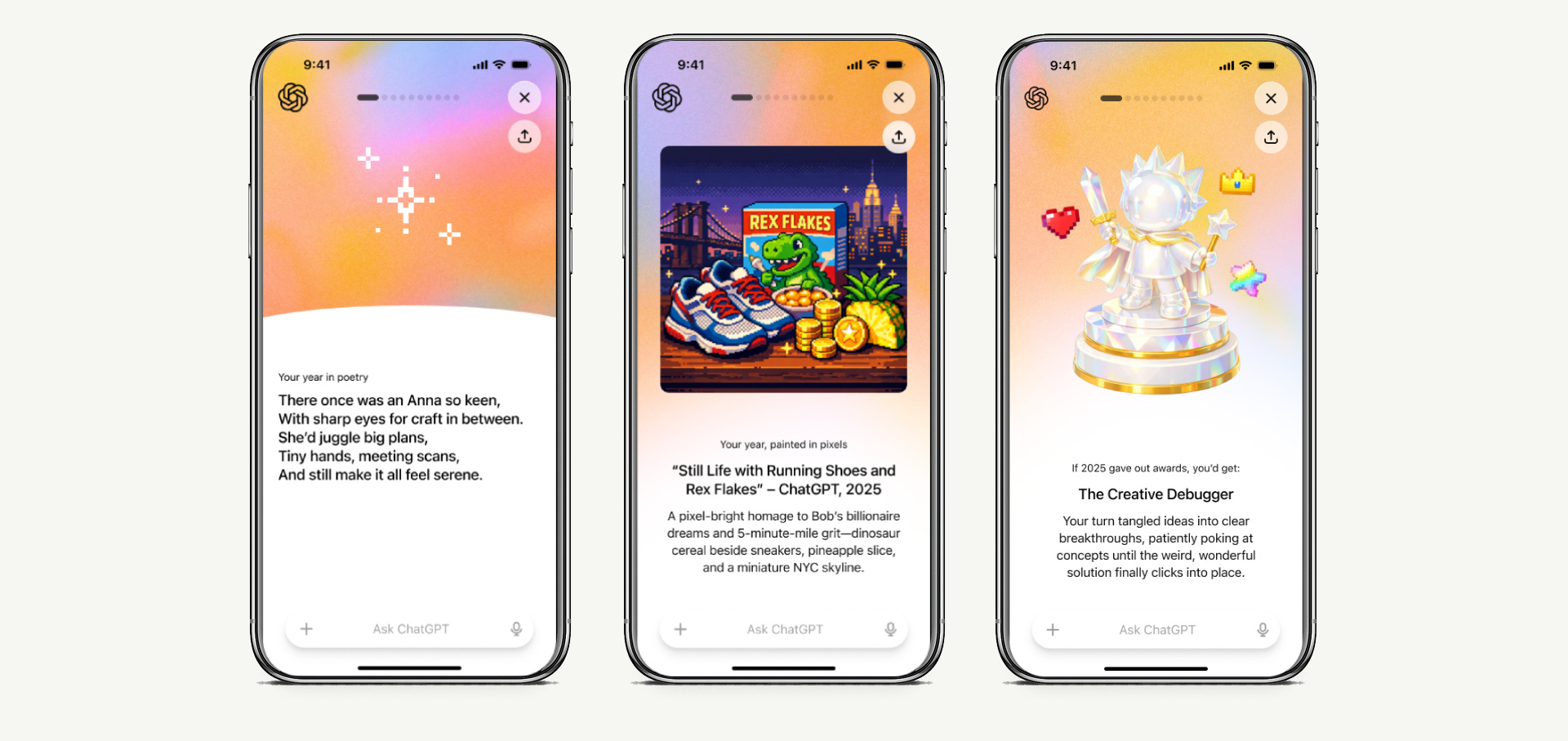
2026, in my view, will likely be the year we will see truly spectacular AI-native wrapped experiences. Granola showed how AI can be used to generate witty summaries of users’ meeting patterns. In the next evolution, one could imagine your favorite artist calling you by name, or previewing a personalized song they’ve created just for you with your name worked into the lyrics. Memory from AI products could draw magical insights about you that other apps likely cannot. Your Year With ChatGPT is an early glimpse of this. These would be orthogonal to what Spotify does.
For the others, late November will continue to bring the same annual ritual. Somewhere, a tech CEO or VP of Product will watch Spotify Wrapped go viral yet again and send their product teams a request.
“We should do this.”
If you enjoyed this post, please consider sharing it on your socials or with someone who might also find it interesting. You can follow me on Twitter/X or LinkedIn for more frequent business and tech discussions.
Appendix: Examples from 2025
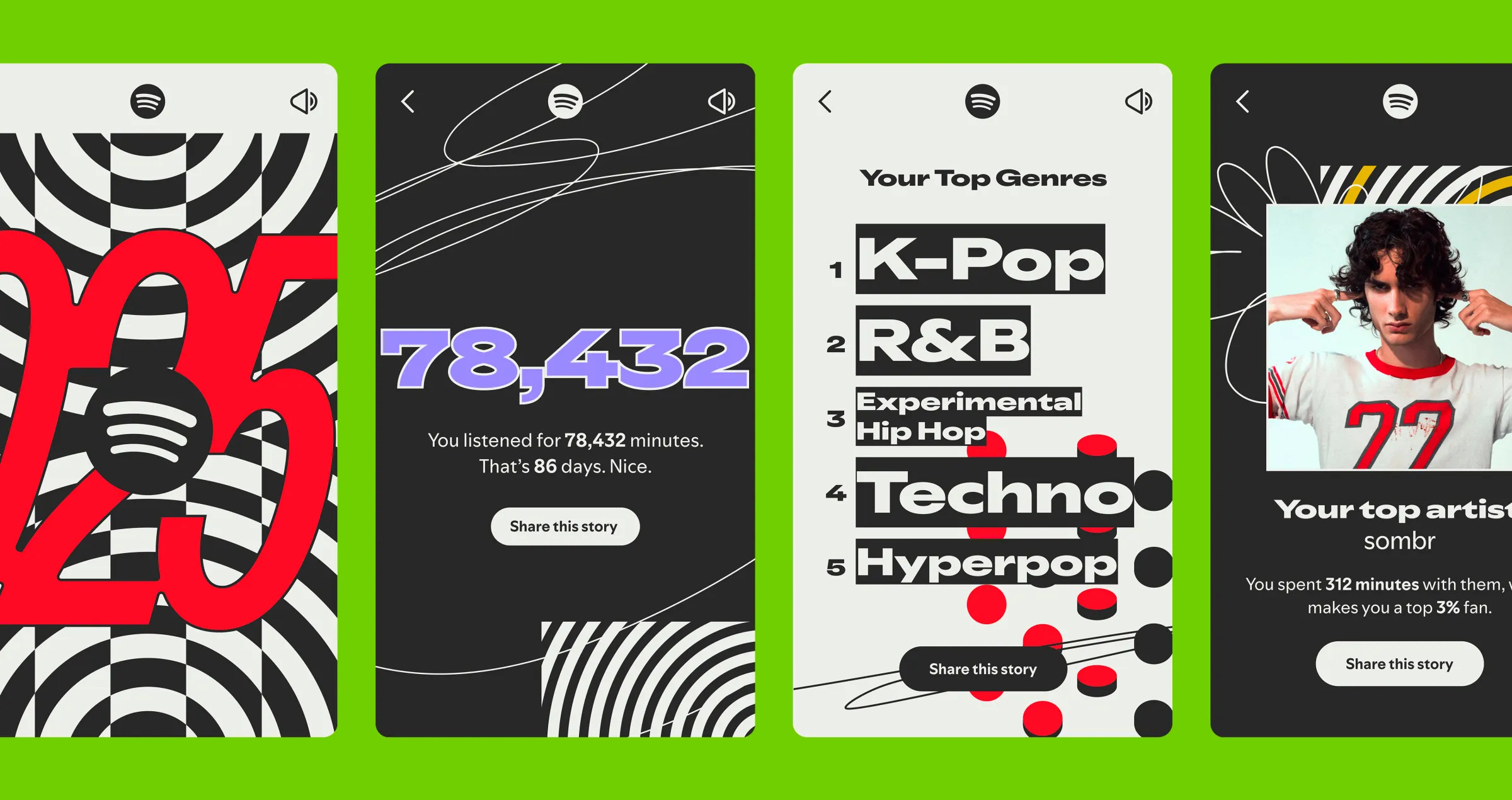
Spotify (the OG): 2025 Wrapped
Strava: Year in Sport 2025 personalized (and aggregate).
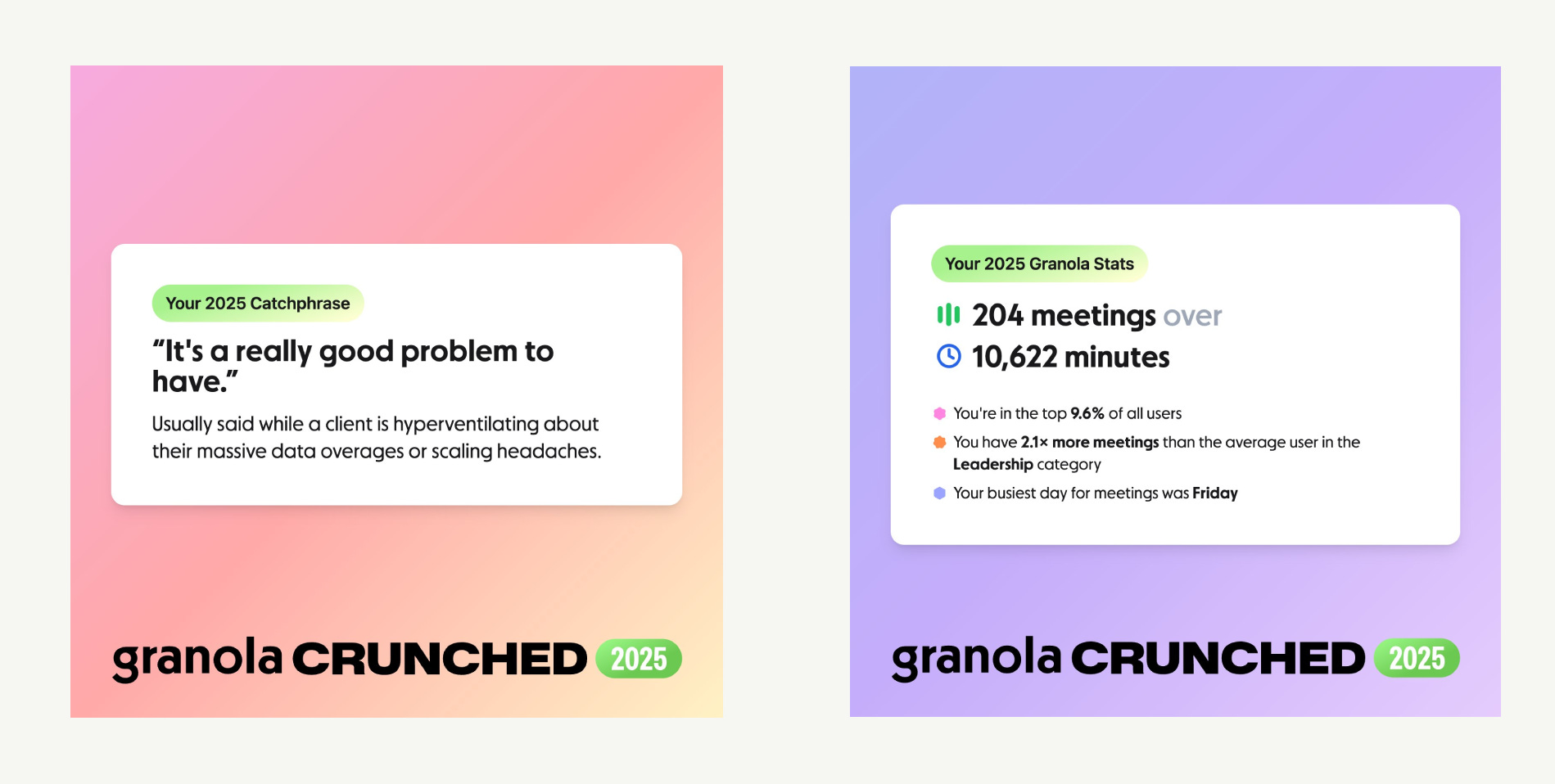
Granola.ai: Crunched 2025
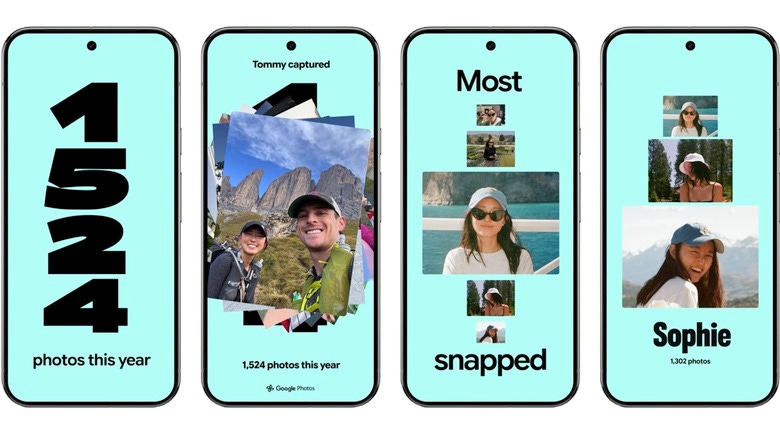
Google Photos: 2025 Recap
Google: Year in Search 2025
ChatGPT: Your Year With ChatGPT
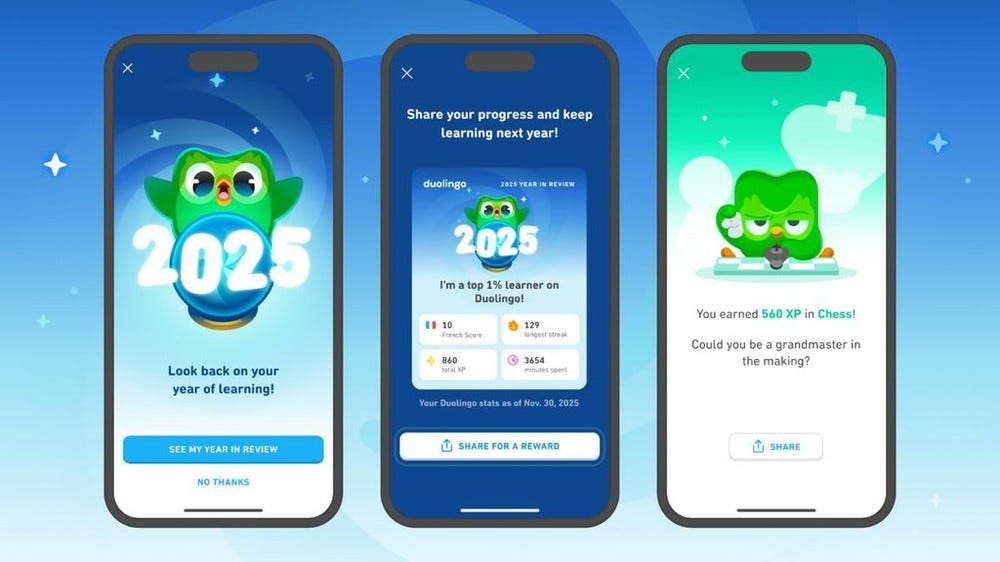
Duolingo: 2025 Year in Review
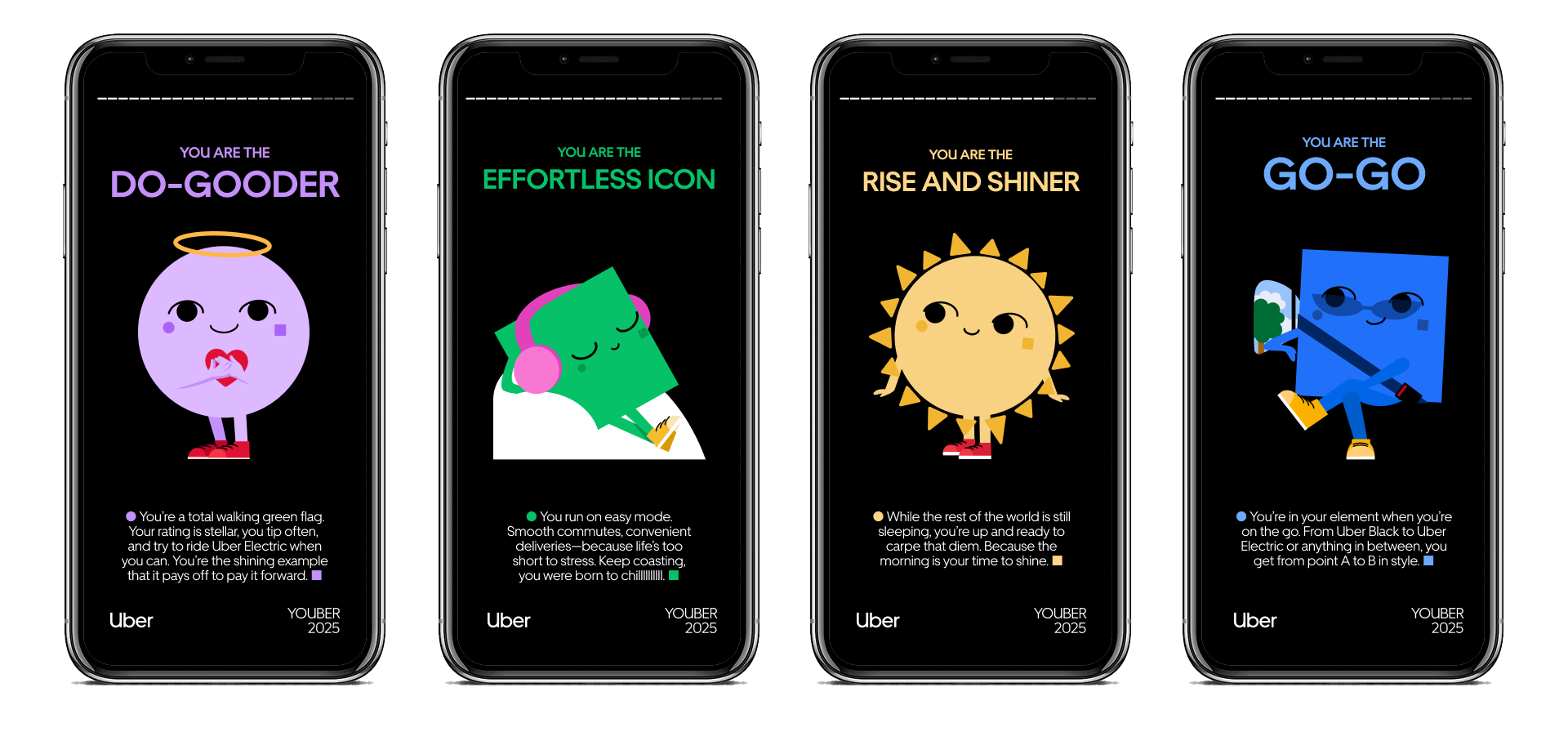
Uber: YOUBER 2025
Cursor: Your Year in Code
NYT: Year in Games
Amazon Music: 2025 Delivered
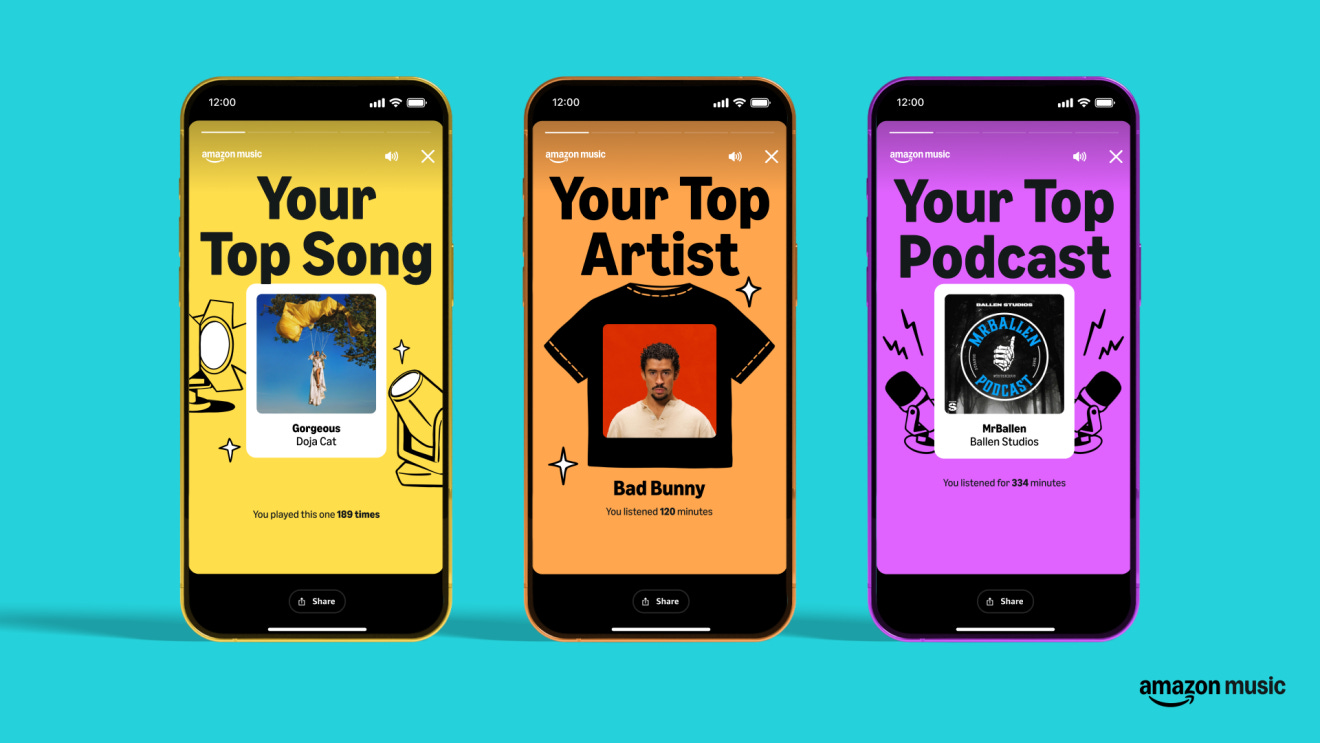
Apple Music: Replay 2025 (separate review for Artists)
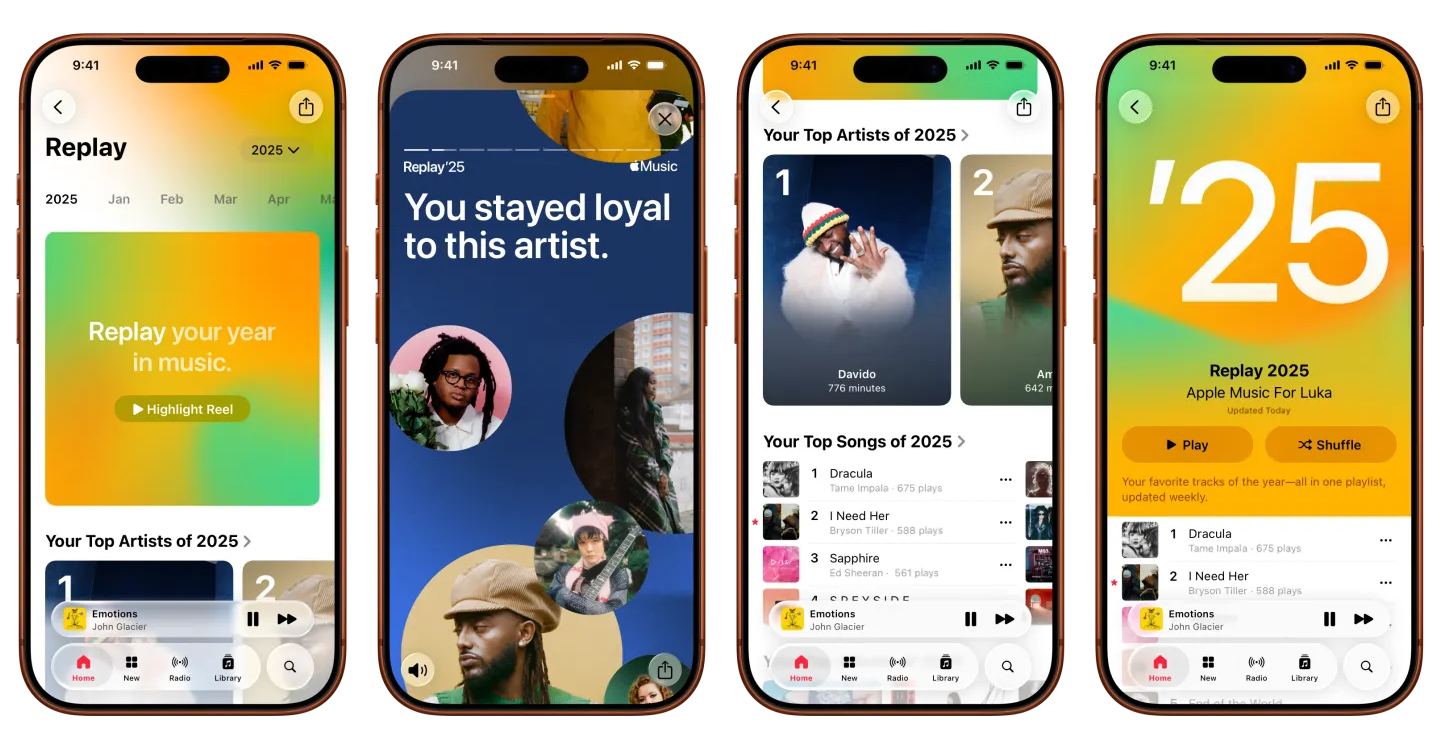
LinkedIn: Year in Review 2025
Discord: Checkpoint 2025
Spotify Wrapped Press Release, 2025.
YouTube at 20, Forbes, 2025. And YouTube Official Blog, 2025.
No you shouldn’t do a Spotify Wrapped campaign, Adam Fishman, 2022.
The ROI of Wrapped, Lenny’s Community Wisdom 165, 2025.
“More than a year after launching LinkedIn Games, engagement remains strong: 86% of people who play return the next day, and 82% are still playing a week later,” LinkedIn’s press release, 2025.
Facebook Apologizes for Pain Caused by ‘Year in Review’ Posts, Time Magazine, 2014.
I'm a product leader so... we should do this!
Wreflection Wrapped
1) Top Companies Referenced
OpenAI — 15+
Google (Gemini / Workspace / Antigravity) — 8+
Microsoft / GitHub Copilot / Teams — 7+
Amazon / AWS — 6+
2) Top Nouns Used (Across All Articles)
AI — very high
models — high
platforms — high
markets — high
tools — high
developers — medium-high
3) Total Number of Em Dashes (—)
~45+ em dashes across all publicly accessible articles
4) Most Entertaining Sentences
“Everything is a wrapper. OpenAI is a wrapper around Nvidia and Azure. Netflix is a wrapper around AWS.”
“It is 1995. Your computer modem screeches as it tries to connect to something called the internet.”
“Most websites are just text on gray backgrounds with the occasional pixelated image.”
This was the first year I viewed my LinkedIn year in review (not sure if they did it previous years) and I was similarly surprised that none of my games stats were included given how much I play. I also found it hard to get to, with the only way to see it through an email link they sent me. This felt like an easy opportunity to showcase it in app so that I could view it again if I wanted to.